Block Wall or Retaining Wall: What's the Difference?
They can look alike from the street, but one of them is built to resist the weight of the ground behind it.
October 13, 2026 · 3 min read
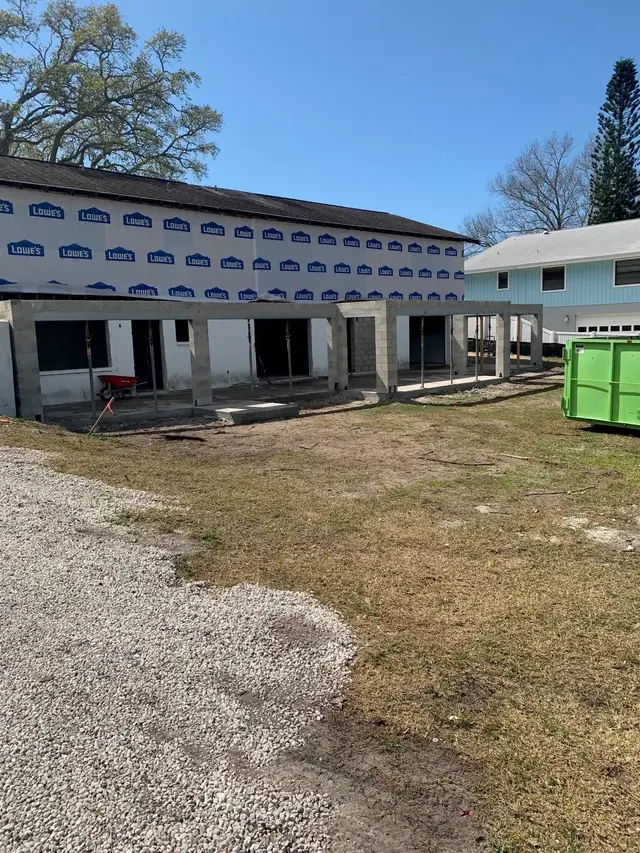
From the road, a block wall is a block wall. Same material, similar height, often the same finish. But two walls that look alike can be built very differently, because they're doing different jobs. Knowing which one you need, before you ask for an estimate, saves time and keeps you from asking a boundary wall to do something it was never designed to do.
A retaining wall holds back soil
A retaining wall manages a grade change. It holds soil in place where the ground on one side sits higher than the other, and it's built to resist lateral pressure from the ground behind it. That sideways push is real and constant, and it gets worse when water collects in the soil. A retaining wall has to be designed around that load, which is why it's built to a different standard than a wall that just stands on level ground.
If your yard has a slope you want to level, a raised bed you want to hold, or a drop you need to manage near a driveway or patio, you're likely describing a retaining wall. Retaining walls are also included among the structural jobs on our Concrete Services page.
A block wall at grade is a boundary or a screen
A block wall at grade serves as a boundary, a privacy screen, a noise barrier or a decorative feature. It stands on ground that's roughly level on both sides, so it isn't holding anything back. That means it isn't built to the same load spec as a retaining wall. It still needs a proper layout and foundation, but it's not designed to resist the weight of a hillside.
Where it gets tricky is when the site isn't clearly one or the other. A fence-line wall on a lot with a gentle slope can end up retaining a little soil without anyone planning it. That's a good reason to have the site looked at, so the wall is built for what it will actually face. We assess your site and recommend the right structure for what you're trying to accomplish.
Quick comparison
- Retaining wall: holds back soil, manages grade changes, built to resist lateral ground pressure.
- Block wall at grade: boundary, privacy, noise screening or decoration, not built to hold soil.
- Both: need a planned layout, a proper foundation, careful construction and a clean finish.
Matching masonry you already have
Many block projects aren't new builds. You might be extending a wall, repairing a section, or adding a pillar next to existing work. In most cases we can match existing masonry. During the site visit we evaluate the existing block, the mortar color and the cap material, and tell you what's achievable before work begins. An honest match is better than a promise you can't keep, so expect a straight answer about what will blend and what won't.
Pillars, planters and outdoor kitchens
Block isn't only for walls. We build pillars, raised planters, and structural bases for outdoor features. For outdoor kitchens, the scope is specific: we construct the concrete block framework and the structural base. Countertop installation, appliances and finish material are handled by other trades. We're glad to coordinate with them, or work alongside a general contractor managing the full project.
You can see the full range, from layout and foundation through construction and finishing, on our Blocks and Masonry page. If you're a builder or developer, we also work with general contractors on commercial and residential block projects, with contractor and commercial estimates provided within 10 days.
What to tell us when you call
You don't need drawings. A few details are enough: what the wall is for, how high you'd like it, whether the ground behind it is higher than the ground in front, and what it needs to match. Photos help. From there, we'll look at the site and recommend the right structure.
Start from the contact page, or call Perkins Concrete at (727) 531-2545. We offer free on-site estimates, and residential estimates happen within 36 hours.
Perkins Concrete, (727) 531-2545
Call (727) 531-2545More articles
Why Florida Concrete Cracks, and Why the Surface Is Rarely the Cause
Most concrete failures in Florida start below the slab, which is why a patch on top so often fails to hold.
Concrete or Pavers for a Florida Driveway?
Both can perform well in Florida, so the better choice comes down to how you want to live with the driveway for the next several years.