Why Florida Concrete Cracks, and Why the Surface Is Rarely the Cause
Most concrete failures in Florida start below the slab, which is why a patch on top so often fails to hold.
October 1, 2026 · 3 min read
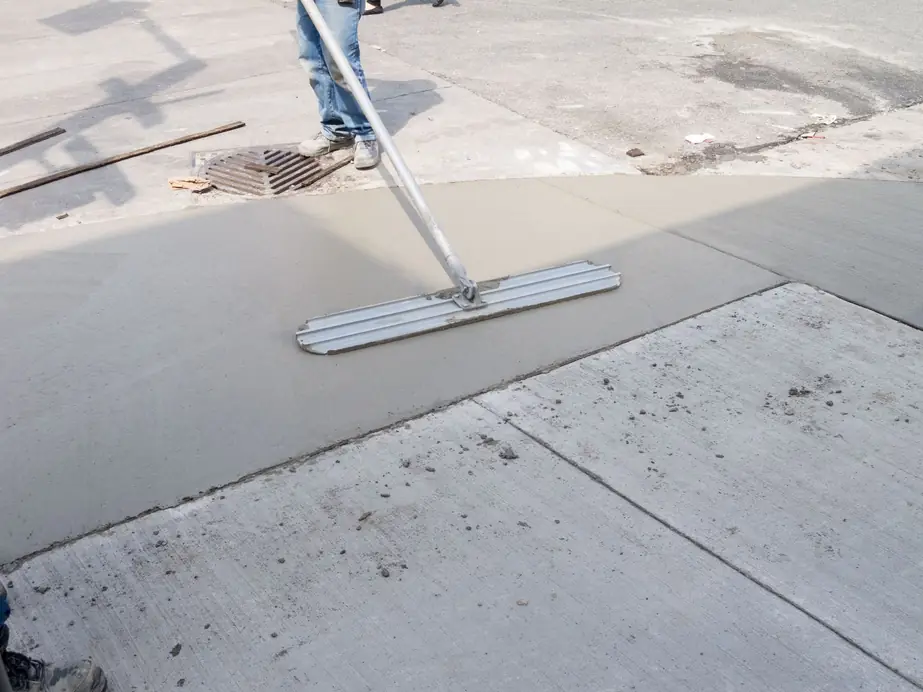
If you own a driveway, patio or garage slab in Tampa Bay, you have probably looked at a crack and wondered whether the concrete was poured badly. Sometimes it was. More often, the concrete is fine and the problem sits underneath it. Our view, after working in Pinellas, Hillsborough and Pasco counties since 1989, is simple: most concrete failures in Florida trace back to two things. Inadequate sub-base preparation, and drainage that wasn't designed into the project from the start.
What the sub-base actually does
A slab is only as steady as whatever it sits on. The sub-base is the compacted layer under the concrete, and its job is to give the slab even, firm support across its whole footprint. When that layer is thin, loosely compacted or uneven, the slab ends up bridging soft spots. Concrete is strong when you squeeze it and much weaker when you bend it. A slab left unsupported in one corner will eventually bend, and it answers by cracking.
You can't see any of this once the pour is done, which is exactly why it gets rushed on jobs where the sub-base is treated as an afterthought. The finish looks the same on day one either way. The difference shows up a year or three later.
Why drainage matters as much as the pour
Water is the other half of the story. Rain that has nowhere to go will find the edges and the underside of a slab. If the grade sends runoff toward the concrete instead of away from it, the ground beneath can wash out or soften, and the support you paid for slowly goes away. A walkway that pools after every storm is a drainage problem wearing a concrete costume.
That is why every job we take on starts with a site evaluation, regardless of size. We look at the soil, the existing drainage and the grade before anyone talks about finishes. A small patio and a large driveway get the same first step.
Repair or replacement: how to tell
Not every crack means a tear-out. The honest answer depends on what caused the damage. Surface wear and minor cracking can often be addressed without replacing the slab. Settling, structural cracking or drainage failures usually point to a sub-base problem, and a surface repair won't solve that. You can patch it, and it will crack again in the same place for the same reason.
A few things to look for before you call anyone:
- Is the crack hairline and stable, or is one side higher than the other? A step between the two edges suggests the slab is moving.
- Does water sit on the surface after rain? Standing water means the grade is wrong, and the slab will keep paying for it.
- Is the damage in one spot, or does it run across the whole slab? A single bad corner can have a local cause. Widespread cracking points to a bigger issue.
- Has a previous patch already failed? If so, the cause was never fixed.
We assess the cause during the site evaluation and give you a straight answer before recommending a scope. Sometimes that answer is a repair, and we'd rather tell you that than sell you a new slab you don't need.
What a properly built slab looks like
For slabs that carry real weight, like a garage, a shed pad or an addition, the slab is sized and reinforced for the intended use and load, with proper sub-base preparation and drainage grading underneath. That is the work covered on our Concrete Services page. It also covers entry steps, flatwork and concrete repair, so it's a good place to start if your problem is a slab that has already started to move.
Driveways and walkways follow the same logic. A finish can be plain, colored, exposed aggregate or broom textured, but none of that matters if the ground under it isn't ready. If your walkway pools or your driveway has settled, our Driveways and Pathways page explains how we approach both new work and fixes.
Catch it early
Whatever you have, small cracks are cheaper to deal with than big ones. Keep surfaces swept and rinsed, seal on schedule where sealing applies, and address cracks early before they spread. If you can't tell a cosmetic crack from a warning sign, send us a message through the contact page or call.
We offer free on-site estimates, and residential estimates happen within 36 hours. Call Perkins Concrete at (727) 531-2545 and we'll come look at what's really going on under your slab.
Perkins Concrete, (727) 531-2545
Call (727) 531-2545More articles
Concrete or Pavers for a Florida Driveway?
Both can perform well in Florida, so the better choice comes down to how you want to live with the driveway for the next several years.
How to Keep a Florida Pool Deck Cool Underfoot
A pool deck should be comfortable at noon, not just good looking at sunrise. Color and texture decide which one you get.